Layers of Time and Existence

It’s always strange when the topic of one book I read leads right into the next.  Jeanette Winterson’s novel, Sexing the Cherry surprised me in many ways.  To begin with, I never got around to reading the back cover, so on the basis of the title I expected an erotic romp rather than a one-sentence reference to gardening terminology.

Then the book begins with a gruesome female giant and a boy she finds in the Thames set in 17th Century England – my least favorite time period.  I cringed.  Six pages in I wanted to toss the book in the giveaway pile because I struggled to connect with the voice of the giant.  But then Winterson’s magical gift overtook me, and I was lost in a beautiful and poetic story.

The giant suffers abuse by the Puritans, and witnesses the execution of the King.  “The Puritans who wanted a rule of saints on earth and no king but Jesus, forgot that we are born into flesh and in flesh must remain (Winterson, 70).”  She goes on a murdering spree – the best method of attack being in a brothel where the Puritans purge their fetishes in secret.

“I have met a great many Pilgrims on their way towards God and I wonder why they have chosen to look for him rather than themselves… if the other life, the secret life, could be found and brought home, then a person might live in peace and have no need for God.  After all, He has no need for us, being complete (Winterson, 116).”

The boy Jordan loves the giant, though as he grows realizes it’s not right to feel so tiny next to your mother.  He dreams of becoming a hero, and eventually sails to exotic places, both in the world and in his mind – beyond time, place, existence.  He finds more mysteries than answers.

“The inward life tells us that we are multiple not single, and that our one existence is really countless existences holding hands like those cut-out paper dolls, but unlike the dolls never coming to an end.  When we say, ‘I have been here before,’ perhaps we mean, ‘I am here now,’ but in another life, another time, doing something else.  Our lives could be stacked together like plates on a waiter’s hand.  Only the top one is showing, but the rest are there and by mistake we discover them (Winterson, 100).”

I once had a professor who always said, “We lead one life, but we have many lives within it.”  This is very true of Jeanette Winterson.  She was adopted and grew up near Manchester, England.  Her parents were working class and Pentecostal.  They intended her for the missionary field and by age six, she was evangelizing and writing sermons.  At sixteen she realized she was a lesbian and left home.  Her mother told her, “Why be happy when you could be normal?”  She took several odd jobs and eventually supported herself through an English degree at Oxford.  Her first book Oranges Are Not the Only Fruitcame out in 1985 and since then she has had a very successful literary career.

Winterson’s novel, Sexing the Cherry reminds us that we are all explorers of existence.  It is in the distance between who we are now and who we will be by the end of our lives.  Catching up to a mind and body filled with the knowledge of experience – aware that we are finite in the layers of the earth – but connected to all things in consciousness.

A friend once told me that I give her the creeps because I’m like a ghost from the 1920’s.  It might have helped that at the time we were working in a Circus tent that was one hundred years old.  But she was right.  I have always felt more akin to a life lived in 1920’s Paris – busting at the seams with artists and writers.  I keep searching to find that place wherever I go.

It’s like the feeling you get when you listen to a song that was written before you were born.  You are certain you were there.  You feel everything that was felt at that exact moment of time.  Nostalgia overwhelms you.  You almost want to go back, but were you ever there to begin with?  Is it a common shared memory passed down – or do we live through other lives?

And what has really changed between the 17th century and the present? Our needs are the same – food, shelter, companionship, sex, and the need to record and understand the human experience.  All that has changed is the scenery.

Everyday at my writing table I have the gift of an amazing view of Seattle.  Buildings stretch out from downtown past Lake Union.  The space needle looms to the right and the Puget Sound and Olympic Mountains stand behind it.  I watch hundreds of cars passing everyday.  And all day long people walk up and down the bridge.  I see the same people over and over, but most I’ve never seen before.  They are walking the dog, buying the groceries, going to work or the gym.

One old man never has a destination.  He is Native American and mentally ill. He walks in circles everyday, wearing the same clothes and the same cane, yelling obscenities to keep people away.  He lets life happen to him. He finds interesting things left by those who leave the past behind.

Perhaps I love the city for its endless layers.  The energy is invigorating.  People keep circulating within hundreds of overlapping stories. Their footsteps mark the passage of time.

the view from my window

     the view from my window

DSCN0531

Why I Stopped Believing in God

Image

After my sister was born, my mom was told she couldn’t have any more kids.  Six years later, I was her miracle.  She always told me I wouldn’t be here if God hadn’t intervened.  So I guess it’s kind of ironic that I no longer believe in God.

The writer Christopher Hitchens passed away last week.  In Vanity Fair he openly shared his struggle with cancer over the last year in his column.  His death brought him to life in my mind, and I knew it was time to read his book, God Is Not Great – How Religion Poisons Everything.  I had suspected this all of my life, but never had the words to fully formulate what I felt.

Over Christmas I felt agitated by the fact that my parents are not able to accept that I am not a Christian.  They gave us a book entitled Dinner With a Perfect Stranger about a modern day businessman who has dinner with Jesus.  On the back flap is a direct quote from the character of Jesus, “… You’re worried about God stealing your fun, but you’ve got it backwards…  there’s no adventure like being joined to the Creator of the Universe.”

I think my parents feel that this is why I left the church – because it wasn’t fun enough.  My mom kept telling stories about people being transformed when they were ‘saved.’  I just had to say it, “Actually, for me it was the opposite.  I was depressed when I was a Christian.  I am finally healthy after breaking down all those old mental patterns.”  Immediately my dad leapt over from the coffeemaker and held my shoulders in his hands, “Never stop searching Lauren.”

“I never do.”  Of course my search does not lead back to where my dad would like it too.  I am a creative thinker, and religion does not like either of those things.  I was in Christian schools from 3rd grade through college.  I was taught to be afraid of everything that had to do with “the world.”  But this only made me want to understand exactly why I should be afraid.  I began to have a lot of questions.  But if you question faith, you are a weak believer.  Questions equal failure.

Towards the middle of college I decided to put it all in and really discipline my life to God.  But the more time I spent praying and meditating the more delusional I became.  I started to have visions of absolute destruction that I would somehow manage to escape.  Then there was the night in my dorm room, being taunted by spirits.  I looked in the mirror and had the distinct sense that I was no longer in my body.

It felt like I was in a life or death struggle.  A poltergeist.  If Jesus wasn’t inside of me, the spirits would take me over and I would be obliterated.  I really believed this.  All the fear I’d been brainwashed with, and all the guilt, and my complete split personality was driving me mentally insane.  I’d been severely depressed since the age of nine and had been suicidal for ten years.  But it was really just the need to kill the side of myself that wasn’t me at all.  It was the side that everyone around me wanted me to be.  I felt so much pressure.  I can remember my disbelief going back to the age of five – but all that time fear had ruled the roost.

After college I began the long, arduous process of retraining my brain how to think outside of the false concepts of religion.  I went to extremes, breaking the old self through pleasure.  Eventually, I grew numb to all of my devices for forgetting.  It took me ten years to finally be ready to face what I really felt.  And then I began to feel a great deal of anger.

I don’t blame my parents.  I love them and I support them in the way that they feel.  My mom was very extreme when I was young, but I blame all the people that she was susceptible too.

More and more I began to see that pastors and leaders in all faiths are simply people hungry for power.  They like to preach that if you love God, you will get rich.  But if bad things do happen, never question God, and never question the pastor because his words come from God.  Of course, power and libido are made for each other.  I witnessed the downfalls of many pastors, usually due to a secret sexual life that leaked.

Then there is the issue that religion and the concept of God are completely man-made.  “God did not create man in his own image.  Evidently it was the other way about, which is the painless explanation for the profusion of gods and religions, and the fratricide both between and among faiths, that we see all about us and that has so retarded the development of civilization (Hitchens, 8).”  If you take the Bible literally (which many Christians are taught to do), God comes off as a complete mental case and a reflection of the lunacy of man.  And religion is responsible for more lunacy than anything else in the history of humanity.

“Violent, irrational, intolerant, allied to racism and tribalism and bigotry, invested in ignorance and hostile to free inquiry, contemptuous of women and coercive toward children: organized religion ought to have a great deal on its conscience (Hitchens, 56).”

It seems lazy to never question religion, or explore all the evidence against it.  But it has more to do with fear.  When you are infiltrated with a belief system from birth, and told that everything else is wrong, and everyone you know is within the faith; if you leave, you have nothing at first.  You have to build a new life.  You have to change the way you’ve been trained to think and die to the old self to be reborn an individual.

People will always try to explain the universe.  And the more unbelievable it is, the more people are apt to believe.  “It is not snobbish to notice the way in which people show their gullibility and their herd instinct, and their wish, or perhaps their need, to be credulous and to be fooled.  This is an ancient problem.  Credulity may be a form of innocence, and even innocuous in itself, but it provides a standing invitation for the wicked and the clever to exploit their brothers and sisters, and is thus one of humanity’s great vulnerabilities (Hitchens, 161).”

For a while I explored other belief systems – Buddhism and concepts of Hinduism, Shamanism and Wicca.  Anything mysterious seemed like it might be the thing.  But it all turns out to be the same.  An insecure chosen one who claims to know all the secrets, while the further in you go the more sinister it becomes.

Religion is only made real by the minds that believe it is real.  And religion will exist as long as there is fear – fear of ourselves, fear of death, fear of each other.  Religion thrives on fear.  And powerful people take advantage of this.  They have always done their best to silence anyone who questions.  “All religions take care to silence or to execute those who question them (and I choose to regard this recurrent tendency as a weakness rather than their strength) (Hitchens).”

The claim of all religions is that you will be freed from pain and suffering if you believe.  But I have not found this to be true.  In fact, my experience with Christians was always just the opposite.  Repression equals depression.  And as Christians look down on other people, it makes them feel just a little bit better.  On one hand they function as a servant to God, on the other the ego is served through a God that cares about their minute details.  At my college it was a common occurrence for a boy to approach a girl he’d never spoken to before and say, “God told me that I am to marry you.”  How wonderfully self-serving!

I believe in a universal connective energy between us.  I feel that other dimensions do exist.  But none of it has anything to do with simplistic notions of good and evil.  I am not a child who needs rules and boundaries and bedtime stories.  I am an adult who is open to the full experience of birth, life, death, and what lies beyond.

Life after religion is a gift of happiness.  I speak my mind, and question, and gather information and always remain in awe of the fact that the universe is full of inspiration in its own right – overlapping layers of time and existence, a beautiful and heroic place made even more amazing without the existence of a man-made God and dictator.  I am at peace with the unknown.

A Real Live Girl

            For a while, last summer, I made a good attempt at going to book readings at Elliott Bay Book Company.  I like to study what authors do in their readings, how they present themselves, what sorts of people show up besides the two old ladies who sit up front and knit sweaters with their bifocals on.  Unlike the two knitters, I could only make myself go if I actually wanted to buy the book.  And this fall there has been little to draw me in.  I’m not much for all the cozy historical fiction and ‘we are the world’ multicultural fare.  I realize what really excites me is a thought provoking memoir.  Nothing ever seems stranger than the truth and I like to experience the author’s process of release.  When we write down our stories, we are finally able to let them go.
I went to see Sheila McClear give a reading for her debut book and memoir – The Last of the Live Nude Girls.  She looked stunning with none of the visual queues of an ex-stripper.  Tall, slim, and flat chested, she had the same body type as I do but with much better legs.  She wore a white shift dress that reminded me of the Jetsons with a zipper going all the way down the front.  Her tall tan wedges and long feather earring added contrast to her choppy asymmetric haircut.

The interesting thing about this reading was that I was seeing someone comparable to myself.  My age, first book, sexual subject matter.  I related to her intensely before she even opened her mouth.

There were not enough people in the audience, maybe five or six.  I sensed her embarrassment over this.  She told the organizer the book had gotten great reviews in New York, but she was having trouble garnering interest outside of the city since it was a memoir about working in the Live Girl Peep shows of Times Square.

She began the reading, and all I could feel was how awkward she felt.  It was impossible to tell if the book was any good by the nervous way she read her work.  I thought to myself, at least I’ve had a lot of stage experience for when it comes time to do my own readings.  But then I remembered she had been onstage too.

After the brief reading, she took a few questions.  One man in the back asked, “So why do you think Peep shows have gone out of popularity?”  She didn’t really have an answer, and neither did we.  They just seem like a thing of the past in an era of lap dances.  Left behind with the unsanitary version of Times Square, before it became a Disneyfied family attraction.

I began to feel nervous as I always do when getting a book signed by an author.  Racking my brain for something good to say.  Apparently authors feel the same way, because almost always they compliment me on an article of clothing I’m wearing – a coat or a hat as though this is written in some book promotion guide for writers.

“Awesome reading,” I said abruptly.  She signed the book, “8/25/11 Hi Lauren!  Thanks for coming to see a live girl in Seattle!  XXXO, Sheila McClear”

I thought it was clever.  I liked her, and I desperately hoped I would like her book too.  It was a great read and I couldn’t put it down.  But I felt it could have used a better editor, and that her experience had needed more time for processing.

I am still contemplating how exactly she was drawn into the live shows.  I understand the giant leaps we introverts sometimes take to overcome our shyness.  I also understand just how easily New York can suck you up and spit you out.  Look at me, after three years in New York I had to give up because I couldn’t find a job that paid as much as the first lucky find I’d had.  There is still always the thought in the back of my head that I could’ve made it if I’d just tried harder.  Why hadn’t my tenacity kicked in a little more?  But the sheer force of home drew me back.

In those last few months in New York, I had a friend.  We met through a man we had both been involved with.  Originally she taught English as a second language.  But over ten years prior, our mutual ex-lover had come along and she decided to show him how much he hurt her by working as a prostitute in a fake tanning parlor.  I’m sure it didn’t phase him at all, but now she was running a brothel out of her apartment in the West Village.  It seemed her main motive in being my friend was to convince me to come work for her.  She couldn’t accept that I wouldn’t.  I couldn’t accept that she only saw me as a commodity.

“My Dad can help me out this month, “ I always told her.  I was the only person I knew of who didn’t have a jackass for a Dad.  Cliché as it is, maybe my rejection of sex work partially stems from that.  Why didn’t I do it?  I still wonder.  Reasons why – I hate living a double life and had already done enough in that regard.  I could disappoint my parents by being who I am (aka not a Christian), but I couldn’t abuse them with the knowledge that all the money they’d spent for my education, all the love they’d given me would be in vain since I would be the antithesis of the strong person they raised.  It was also personal.  I didn’t want to end up hating men.  But would it have come to that?  Who can know?

All I saw was that my friend was hugely depressed and didn’t seem to know it.  She resented people for everything they took from her, though she offered them everything.  And towards the end she was ridiculously flaky.  I got off the Path train to meet her for coffee.  “Oh Lauren, I’m so sorry.  A client just called and is only in town for the day.  I’m meeting him at his room at the W.  I can’t make it.  But please come!  I still want you to sit in on a session and just observe to see what you think.  He’ll pay you $300.  And then you can see if you’d like it.”

“Oh no, that’s okay.  I’ll see you another time.”  But I never heard from her again.  She gave up on me.  I found it bizarre that men paid for her – she looked like a stressed out housewife with long scraggly brown hair and a deep worry crease between her eyebrows.  I guess she made men feel safe.

Years later in Seattle I briefly saw her leaving a bar in belltown, getting into a limo with a big group of black guys.  It happened so fast, walking past her in that tight hall as I came through the door; she seemed like a mirage.  Her entire life is like a mirage – appearing here and there in different cities, sitting beneath the law, fading from people’s lives before they ever get too close.

Her loneliness had weighed me down.  Her money weighed me down too.  I was too broke to afford the cabs and expensive restaurants she wanted to eat at.  She probably held that against me.

“Things like sex and nudity were supposed to be imbued with meaning.  But isolated from a relationship, they meant nothing – or rather, I realize now, they became something to be negotiated, and I became nothing – little more than a dress-up doll for them to project their narratives onto (McClear, 22).”

One night at this friend’s apartment I met a woman who worked for her.  She was getting a divorce, her husband had cheated on her, and she had two kids.  She liked sex work almost too much and was lonely enough to find solace in it.  Tall, blonde and bare-breasted, she spread her expensive lingerie across the kitchen table, deciding which lacy silky thing she would wear for her client.  I didn’t realize that business would be in session while I was there, but I decided to roll with it.

It was supposed to be a forty-minute session, but she wouldn’t stop talking to the guy afterwards.  They were in a front room blocked off from the back of the apartment.  We had to be quiet in the back.  But I had to leave.  It was midnight, and I wanted to catch the next train that only came every half hour late at night.  Against my friend’s wishes, I busted a move for the front door.  It jammed and just then the John walked out into the hall.  I saw his look of astonishment as she shoved him back into the room until I could get out.  What had I been doing there anyway?  Out on the street I breathed in the cold air, with every step feeling further away from that heavy, alternate reality.

“That’s what I was learning from New York: you could fit in anywhere if you hung around long enough (McClear, 201).”

In the book, Sheila finally escapes her peep show life and finds work as a writer with enough love, acupuncture and therapy to begin to heal.  But how can you begin to shake off all of those faceless men who make you what they want you to be, or the fellow live girls who disappear into the ether or turn into over-sexualized plastic deformities?

“There was a moment, after every show, after the light abruptly snapped and the glass fogged to opacity, when I could suddenly see my reflection: naked and alone, untouchable, on display like a zoo animal, suspended behind glass (McClear, 45).”


How We Perceive Nudity

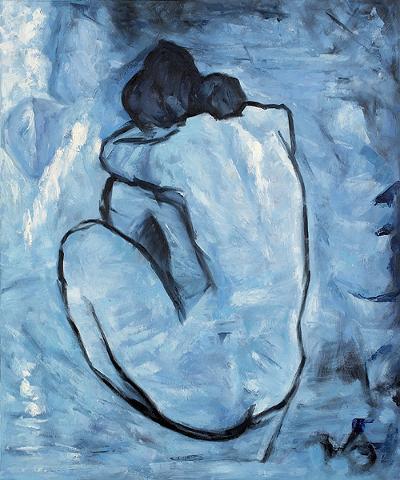
In my evolution of what I like to call “Gypsy Jobs” my latest addition is working as a model for the art school up the hill. I have always had a fascination with Bohemian Paris, artists and their muses, Kiki de Montparnasse. So after several months of thinking about it, I finally brought in my application.

On my first day I had two back-to-back three-hour classes. Bright and early that morning, when I usually wake up, I began with an open studio, monitored by a student. There is always that initial funny feeling when you first take off your robe, like here goes nothing. They started with 10 one minute poses, then 5 ten minute poses, and 2 twenty minute poses. During the longer poses I began to hallucinate. I was staring at a speck on the blanket covering the stage. The speck started to move. I was convinced it had come to life as a bug. In the next class, I stared out the window at a tree and soon I was a heron flying through the large open center of its branches.

I didn’t feel awkward once I was on the stage, only when I was waiting to go on. The pain however was another thing. By the end of twenty minutes, even in a basic standing pose, my feet fell asleep and my legs felt stuck when I was finally able to move. I realized you can’t rest your weight on one straight leg or else you’ll hyperextend and cause an injury. Even though it’s less striking, I’ve learned to always keep both knees slightly bent.

I’ve gotten a lot of compliments since then on my stillness as a model. Having an active mind saves me. I focus on a point, do breathing-exercises to work through the pain, and then distract myself by thinking of interesting memories or ideas for my writing. Now that I model two to four times a week, it feels completely natural, and I forget that I’m not wearing any clothes. It actually feels cozy.

Last week at a long pose session I walked through the class to see their interpretations. In the drawings my weight ranged from 110 to 160. One woman was drawn to the more Rubenesque, and said she tends to draw what she is working with, as in her own body type. The men drew me much thinner than the women. I thought of our differing perceptions – how women put themselves in the females position, and men see women with rose-colored glasses.

The experience of posing got me thinking about how we interpret nudity in our society. Years ago my friend took two of us girls to a nude beach in New Jersey. It was a gorgeous place. I found it beautiful that people of all ages, shapes, and sizes were completely out there. I swam topless and hung out with an older guy in the waves, having fun. Later on at a restaurant I saw him again with his clothes on and had to look twice. He looked like a Senator or an Investment Banker, though I’d had no way to interpret him without his clothes. Now we were back in our hierarchies and I wanted to go back to the beach where we were all equals.

I had a phase when I lived in Hoboken, where I’d drink so much gin I became inspired to take off all my clothes in the confines of my apartment with friends. I guess I liked the feeling of absolute freedom. But the guys interpreted it to mean that I was ready to go. Climb on in or take a number and come back another day. I look back on my own spontaneity in amazement – a desperate need for an adrenaline rush. And it is interesting how nudity outside of the confines of an art class, a nude beach or a hospital is interpreted as sexual. But nudity is much more nuanced than that. Nudity also brings to mind our own mortality, our equality as human beings, the mystery of existence, anatomy, art, beauty, the poetry of motion and form.

Friends and family may not quite understand my job or how I can feel comfortable without clothes. My mother still asks my husband, “Are you okay with this?” But for the first time in years I am enjoying a job and looking forward to going to work. I get to learn more about something I love – art, and be in an academic environment with enormously talented people. I take romantic walks afterwards, feeling poetic, drinking coffee and eating crepes with enough time left in the day to write for a while before dinner. When I’m not at the school, I’m thinking about the next time I get to be there, creating new poses for the students.

It’s an instance where life led me to two books. The Nude Female Figure and The Nude Figure by Mark Edward Smith. They are both visual references for the artist working without a model. I am learning the range of the human form, thinking of ways to inspire the artists. And now, I find myself returning to the place where I began – painting and drawing figures just as I did when I was a kid and was obsessed with fashion illustration and portraiture.

Artists of all ages are honored to be able to work from a live model and respect the opportunity. I get the sense that they are grateful for the model’s bravery. And in the stillness of a pose my mind is in motion, building ideas and images, undisturbed, in perfect meditation.

Patti Smith Lays It Bare

Last night I was driven to finish Patti Smith’s memoir Just Kids, before going out to see Annie Clark aka St. Vincent play at the Neptune.  The book’s ending left me sad and stoic, barely able to look forward to the show.  But I was blown away by Annie’s performance.  I never expected she would have the raw emotion of Patti Smith, gritty and truthful, losing herself in a cover of an obscure punk band.  We need more of that energy out there – real poets who internalize the pain of the world and magically transform it into beautiful art.

In the book Patti shares the development of two struggling artists.  She leaves home and moves to New York with nothing, but when she gets there, she finds Robert Mapplethorpe.  All they have is their dreams, but as they become devoted to each other they manage to survive and build a life on their combined skills.  Their dedication survives Mapplethorpe coming to terms with his homosexuality, and their differing lifestyles as Robert climbs up into high society and Patti chooses the raw environs of rock’n’roll.  They remain until his death interchangeable artist and muse.

Patti Smith to me is synonymous with CBGB’s.  New York lost one more inch of its soul when CBGB’s closed and turned into a trendy John Varvatos boutique.  The boutique celebrates the grit and history of the venue without any of the grit left behind.  Now it’s all shiny and new with expensive clothes to give you that ‘rock star look.’  The dressing room is built over the stairway that once led to the most disgusting bathroom, magnificent in its filth.  Before it closed, the entire venue was a mutation, a continuing saga of live music.

I was fortunate enough to perform there just weeks before CB’s closed. It was before I began turning poems into music for the mandolin.  I was belly dancing for a percussion group, though with the addition of a keyboardist, our set was transforming into a jazz aural landscape.  I always danced barefoot, but the guys in the bands we came with thought the stage was too disgusting.  It had layers and layers of shit on the floor, built up over time.  Blood, sweat, broken bottles, sticky boos and who knows what else.  “I hope you got a tetanus shot.”

I loved experiencing the energy of the bands that had been on each stage, and felt that my bare feet brought me closer to those that had passed before. Despite everyone’s fears, CBGB’s ended up being the greatest bare foot stage experience.  As I danced I felt Patti Smith, the Ramones, Lou Reed, Joan Jett, the Talking Heads, Blondie.  It made me feel I could touch their success.  As though after our set I would step off the stage, put on some shoes and walk in their footsteps.  Surviving on hot dogs and lentils didn’t matter so much after that.

DSC02431

“I can’t believe I just performed on that stage,” I said to a guy at the bar.

“Well, you didn’t play an instrument!”

What an ass.  I turned away from him and gave the bartender my drink ticket.  Playing an instrument is easy in comparison to dancing onstage. Though I did not play music through my hands, my entire body was an instrument.  Like visual sound, I was showing the audience how music moves. From then on our group performed one song where we all joined in a drum circle, building the beat into a crescendo that came tumbling to a halt right after it’s peak.  It was a kick to surprise people as I sat down with the drum – no one could say I was just some fluff dancer.

In a review of our show at CB’s, the writer compared me to the last belly dancer he’d seen at the venue – a woman who stripped back in the seventies.  He claimed my performance was G-rated in comparison, as though I was only there for his titillation. I felt misunderstood and interpreted as an objectified female.  To top it off, after reading the review, the percussionist asked me to wear a skirt with some slits up the side.  I was the lone belly dancer in a universe of men and their opinions.  Despite all of that, every show was a new adventure that I enjoyed immensely.  I bonded with many new people, and as my stage persona changed I went from being called “the belly dancer” to “Joan Baez.”

I no longer perform as a dancer or a musician because I lost the passion for it.  Performing was not the same when I moved back to Seattle.  I never felt a sense of community and support.  Instead of people working together to create something amazing, it is every man for himself.  My skin isn’t thick enough to withstand all the empty venues and people who don’t give a shit about the music.  At my very last gig, I got in a fight with the musician I was sharing a bill with.  He was determined to talk as loud as possible over my set and it was impossible to hear the music.  Through years of being onstage, I never encountered a more offensive musician.  And as I’ve gotten older, I have grown more sensitive and outspoken.

Instead, I like to remember the time I got up to play for a full house, and I saw two girls in the back who were about to leave.  As I began to play, they turned around and were riveted by my song – a poem about the limits of love. They felt what I had written and they knew it for themselves.  It was so intimate, as though there was no one else in the room.  I gave them every word like drops of blood, and by the end there was a tear in my eye.

Being onstage gave me motivation, discipline, confidence.  I learned to take my abilities much more seriously.  Just like Patti, I didn’t know I would ever turn my poetry into music and sing on stage.  But submitting to the flow of creativity, you release yourself to whatever will come.